
Which Appliances Use Electricity Even When Turned Off?
Does a television use electricity when its screen is dark? What about a phone charger left in the socket, a computer that appears shut down, or a coffee machine with no lights showing? The answer is sometimes yes—but not always, and the amount can vary considerably.
A device can look off while still powering a remote-control receiver, clock, memory, sensor, network connection, or control circuit. Other appliances draw so little power that the consumption may be negligible, while a device that is physically disconnected from the mains cannot draw mains electricity at all. The practical way to tell the difference is to measure first, then decide what action is worthwhile.
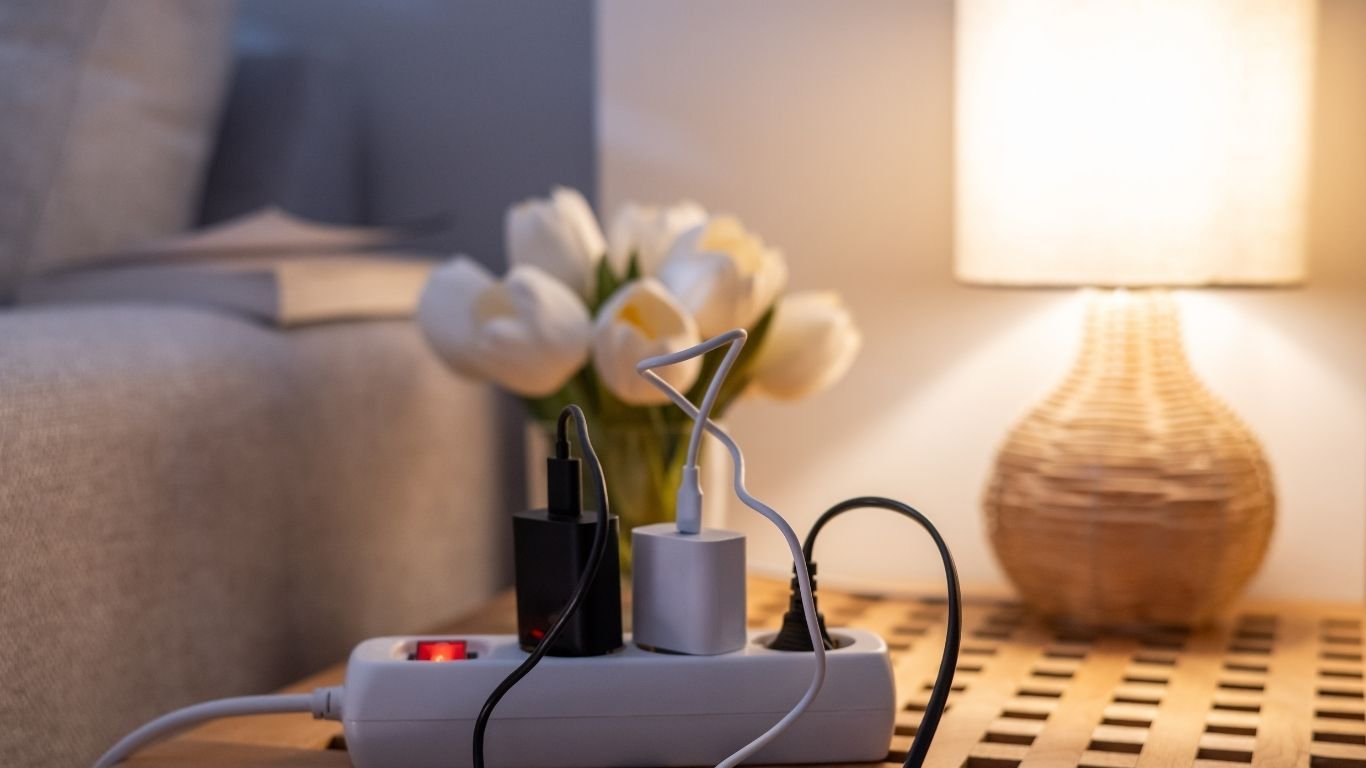
What Is Standby Power?
Standby power is the electricity consumed by equipment when it is not performing its primary function but remains connected to the electricity supply. It may support functions such as remote-control reception, displays, timers, memory, sensors, or network connectivity. This consumer-friendly definition is consistent with guidance from the U.S. Department of Energy.
- Active: The appliance is performing its main function, such as displaying a programme or heating water.
- Idle: The appliance is powered and ready, but not currently doing much work.
- Sleep: A computer or similar device reduces activity while retaining a fast wake-up path.
- Standby: The main function is inactive, but selected electronics remain powered.
- Network standby: The device remains able to communicate over a network or respond to a network request.
- Off: The product has entered its defined off state, which may still allow a small amount of consumption depending on its design.
- Disconnected: The plug is removed, or power is otherwise physically interrupted. In that state, the appliance cannot draw mains electricity.
These labels are not interchangeable. Current European ecodesign rules distinguish off mode, standby mode, and networked standby mode for covered household and office equipment; the EU Commission Regulation 2023/826 sets requirements for relevant product categories. That does not mean every appliance has the same limit or that every product category is covered.
Vampire Power and Phantom Loads: Useful Terms, Not a Diagnosis
Vampire power and phantom load are informal terms for energy used while equipment is switched off, idle, or not carrying out its main task. They are useful descriptions, but they can encourage exaggerated assumptions. Standby consumption varies by model, age, settings, power supply, and operating state. A device should not be treated as a significant source of waste simply because it has a standby mode.
Which Household Devices Should You Check?
Start with devices that need to respond quickly, remember settings, display a clock, maintain a connection, or accept remote commands. Common categories include:
- Entertainment systems: televisions, soundbars, streaming boxes, game consoles, and set-top boxes may power remote receivers, network functions, or quick-start features.
- Computers and peripherals: desktops, monitors, printers, speakers, docks, and external drives may remain in sleep, wake-on-network, or charging states.
- Chargers and adapters: an unloaded charger may draw little or no meaningful power, but the result depends on its design. Do not assume an old rule applies to every modern charger.
- Kitchen appliances: coffee machines, microwaves, ovens, induction equipment, and countertop appliances may retain clocks, displays, timers, or control electronics.
- Smart-home and networking equipment: hubs, voice assistants, routers, access points, and connected appliances generally need continuous power for their intended functions.
- Heating and control equipment: thermostats, receivers, pumps, and control systems can have safety or comfort functions that depend on being powered.
Do TVs, Chargers, Computers, and Coffee Machines Use Power When Off?
TVs: many televisions use standby power so they can respond to a remote control, maintain network features, receive updates, or start quickly. Some settings reduce or disable these functions. The only reliable answer for a particular TV is to check its specifications or measure it in the desired state.
Phone chargers: a charger connected to the wall with no phone attached may draw a small amount, zero, or an amount that is difficult to distinguish from the meter's measurement threshold. The design and age of the charger matter. Avoid applying a universal wattage or savings claim.
Computers: a computer that is sleeping is not the same as one that has completed a full shutdown. Sleep, hibernation, wake-on-LAN, USB charging, and connected peripherals can all affect consumption. Before cutting power, shut the computer down through its operating system.
Coffee machines: some models switch their heating system off but retain a clock, display, timer, memory, or control circuit. Others may use very little power when off. An automatic shut-off can also remove scheduled brewing or other convenience features, so measure and decide based on actual use.
What Is Household Base Load?
Base load is the electricity a home uses continuously or nearly continuously, even when occupants are asleep or away. It can include refrigeration, networking, heating controls, ventilation, security systems, pumps, and other necessary services, as well as avoidable standby consumption. A high base load is therefore not automatically waste. The goal is to separate essential continuous operation from devices that can safely be powered down when they are not needed.
How Much Electricity Can Standby Power Use?
The calculation is straightforward:
Power × time = energy
For an illustrative example, a continuous 5-watt load operating for a full year uses:
5 W × 24 hours × 365 days ÷ 1,000 = 43.8 kWh per year.
This is arithmetic, not a claim that a particular television, charger, or coffee machine typically uses 5 W in standby. A measured load may be far lower or higher, and the financial and environmental significance depends on the electricity rate, the number of devices, and how long they remain powered.
The Measure → Identify → Decide → Automate Framework
- Measure: Record the appliance's active consumption, then switch it off normally and wait for delayed shutdown or network transitions.
- Identify: Note what remains powered and whether the reading belongs to the appliance, its adapter, or several devices connected to the same strip.
- Decide: Consider the measured energy, the device's purpose, convenience features, startup behaviour, and any safety or data risks.
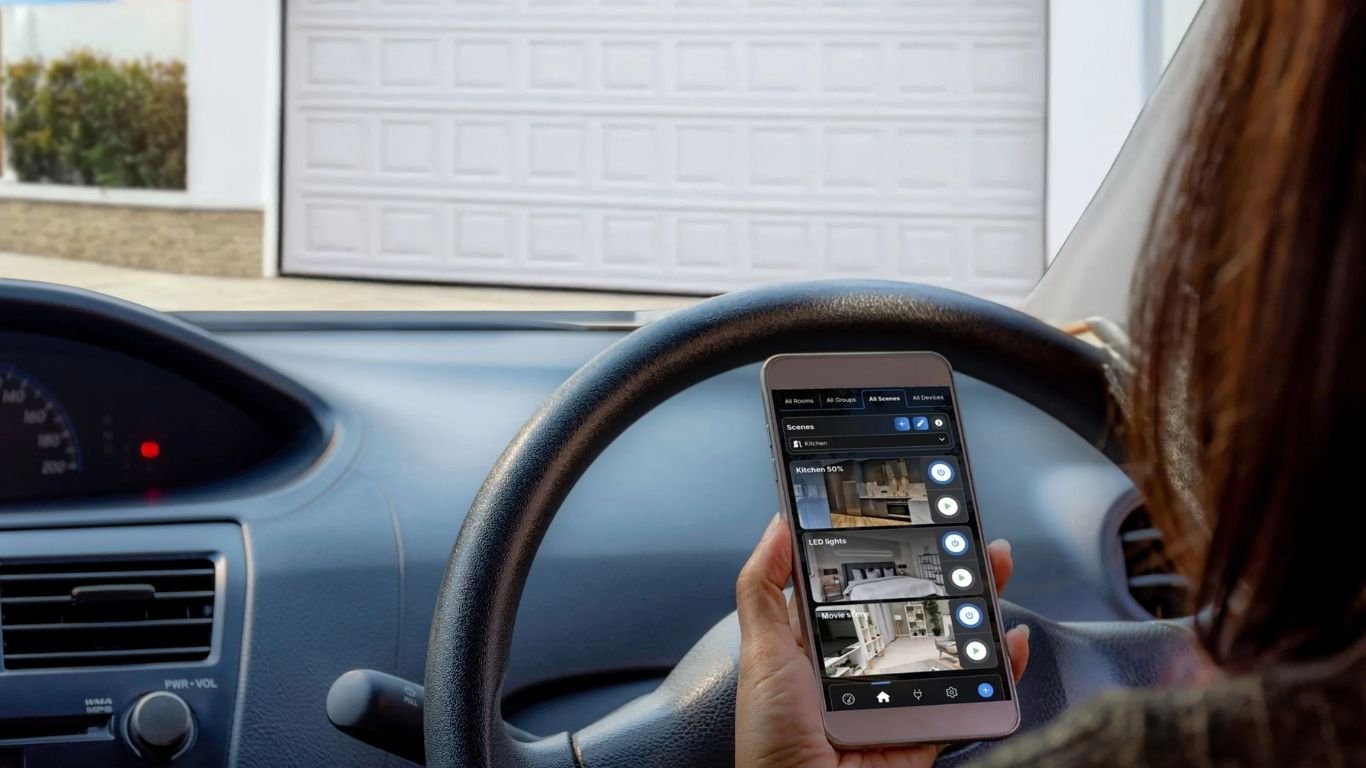
- Automate: Only after confirming that interruption is safe, use a schedule, scene, or compatible smart switch to reduce unnecessary operation.
How to Measure Standby Power at Home
For a plug-in appliance, place a suitable plug-in energy meter between the wall socket and the appliance. Record the active reading while the appliance is working, switch it off using its normal control, wait several minutes if necessary, and record the standby reading. Repeat the test at different times if the product changes state or performs updates.
Very low readings can challenge inexpensive meters, particularly when a device uses short bursts of power or has a low power factor. For a home investigation, consistency is often more useful than false precision: compare devices using the same meter and record the operating state and time.
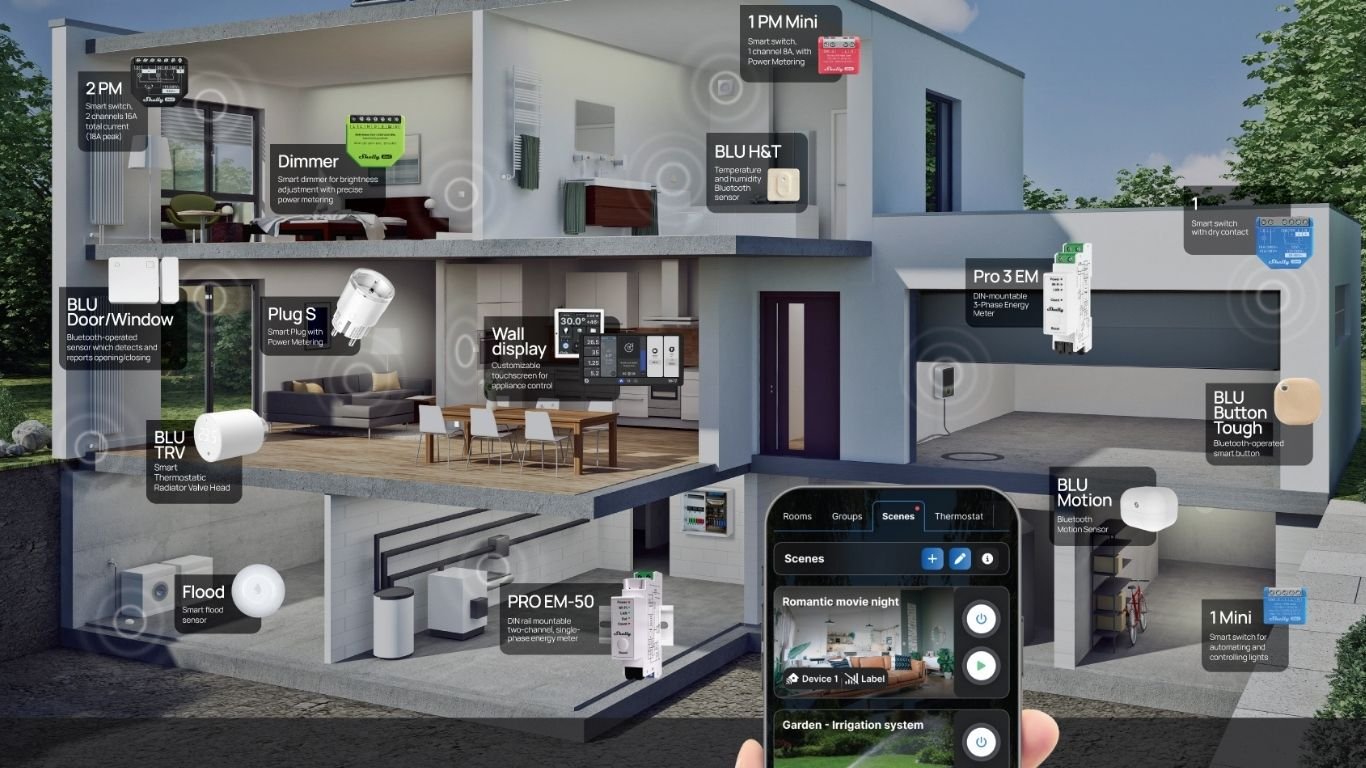
A beginner-friendly plug-in example is the Shelly Plug М Gen3, whose current product documentation describes power metering, remote control, schedules, and automation for suitable plug-in loads. Check the current regional specifications, load limits, socket standard, and installation guidance before use. A monitoring device does not automatically identify the source of consumption or make switching every load safe.
For fixed circuits or installations that need a different approach, the Shelly 1PM Gen4 and Shelly 1PM Mini Gen4 combine measurement and switching for appropriate installations. The Shelly EM Gen4 is positioned for energy monitoring where measuring a circuit or load is the priority, while the Shelly Pro 3EM is intended for three-phase energy monitoring in suitable installations. These are product-discovery examples, not universal wiring recommendations; fixed electrical work should follow local requirements and be handled by a qualified professional where required.
A Simple 24-Hour Standby Power Test
To investigate your home's overnight base load, choose one room or group of plug-in devices. Measure the combined reading before bed, switch off only the appliances that are safe to interrupt, and measure again in the morning. Then restore normal operation and compare the readings. Use a table like this to avoid relying on memory:
- Device or group: TV, console, desk, kitchen counter, or other clearly defined load.
- Active power: Reading while the device is performing its main function.
- Standby or off reading: Reading after normal shut-down and any delayed transition.
- Hours connected: How long the measured state normally lasts.
- Continuous power necessary? Yes, no, or needs further checking.
Standby power is the energy used by appliances and electronics when they are switched off or not performing their primary function.
When Should You Not Automatically Switch Devices Off?
Automatic shut-off is not appropriate merely because a device has a measurable standby load. Do not indiscriminately disconnect refrigerators or freezers, security and safety systems, medical equipment, heating controls, pumps, or essential routers. Interrupting network equipment can disable connectivity or other services. A computer, game console, NAS, or external storage device should complete its proper shutdown before power is removed to reduce the risk of data loss or corruption.
Also consider devices that need to receive updates, maintain schedules, protect a space from freezing, or remain available for emergency notifications. If you are unsure, keep the device powered and check its manual or consult the manufacturer.
The Best Way to Reduce Standby Power
Some appliances use electricity when turned off, while others draw almost nothing or disconnect internally. The difference depends on the product, its settings, and what “off” means in that particular design. Rather than treating every dark display as a problem, investigate the loads that matter in your home.
Measure the appliance, identify the function that remains powered, decide whether continuous operation is necessary, and automate only compatible loads after a safe shutdown plan is clear. A watt meter, plug-in energy monitor, or circuit-level monitor can turn an unexplained base load into useful evidence. Measure before you switch off.
FAQ: Devices Using Electricity on Standby
Do all appliances use electricity when turned off?
No. Some retain powered electronics, some use a very small amount, and some are effectively disconnected in their off state. Physical disconnection prevents mains consumption.
Is standby the same as sleep?
No. Sleep commonly describes a reduced-power computer state designed for faster recovery, while standby is a broader term for a low-power state in which selected functions remain available. The exact behaviour is model-dependent.
Does a game console use power when off?
It may, especially when remote wake, network features, updates, or fast startup are enabled. Measure the console in its chosen shutdown setting, and never cut power before it has completed a proper shutdown.
How can I find my home's base load?
Measure consumption when the home is quiet and occupants are away or asleep, then investigate individual circuits or plug-in groups. Separate necessary services from avoidable standby loads rather than treating the entire base load as waste.
Can a smart plug eliminate standby power automatically?
A smart plug can switch a compatible load according to a schedule or automation, but it does not decide whether interruption is safe and does not guarantee savings. Measure first, check the appliance requirements, and automate selectively.
Comments 0