
What Uses the Most Electricity at Home?

So, what uses the most electricity at home? There is no single answer that applies to every household. Heating, air conditioning, water heating, electric vehicle charging, cooking, laundry, refrigeration, lighting and always-on equipment can all matter—but their importance depends on your home, climate, energy systems, building characteristics and daily routines.
Your electricity bill tells you how much energy was used over a billing period, usually in kilowatt-hours (kWh). It does not automatically explain which equipment created that total. The most reliable way to find your biggest electricity users is therefore to measure, not guess: start with the whole home, narrow your view to circuits, and then investigate individual appliances where appropriate.
What Usually Uses the Most Electricity?
Residential energy use includes several broad categories, including space heating, air conditioning, water heating, appliances, electronics and lighting, as described by the U.S. Energy Information Administration. However, a category that is large in national statistics may not be the largest source of electricity in your particular home.
The main areas worth investigating are:
- Heating and cooling: Electric resistance heating, heat pumps, air conditioners and portable heaters can draw substantial power, especially when they run for many hours.
- Water heating: Electric tanks, immersion heaters and heat-pump water heaters have different operating patterns, and household size and hot-water demand also matter.
- EV charging: An electric vehicle may add significant electricity demand because charging transfers many kWh, even if charging is limited to certain hours.
- Cooking and laundry: Ovens, electric cooktops, tumble dryers and heated drying cycles can use considerable energy during operation.
- Refrigeration and pumps: Refrigerators, freezers, aquarium equipment, well pumps, circulation pumps and dehumidifiers can contribute through repeated or extended runtime.
- Lighting and electronics: Individual LED lamps are often modest users, but many lights, displays, networking devices and other equipment can create a persistent background load.
This is an investigation list, not a universal ranking. The EIA Residential Energy Consumption Survey provides U.S.-specific information about appliances, equipment, housing and energy consumption. Its results should not be copied as universal electricity percentages for homes in other countries, where climate, building practices, fuels and tariffs may differ.
Why the Biggest Electricity User Depends on Your Home
Consider two otherwise similar homes. The first uses electric resistance heating through a cold winter, while the second uses gas heating but charges an EV several times a week. In the first home, space heating may dominate electricity use. In the second, EV charging or water heating may be more significant.
A heat pump may use less electricity for delivered heat than resistance heating under suitable conditions, but its total consumption still depends on outdoor temperature, insulation, thermostat settings, system performance and operating hours. Solar panels can reduce electricity imported from the grid without necessarily reducing the home's total electricity demand. A mild climate can reduce heating and cooling needs, while a hot or cold climate can make those systems central to the bill.
European patterns also vary across countries and housing types. The European Commission explains common bill and consumption concepts, but local buildings, climate, energy systems and household behavior must be considered when interpreting them. Appliance labels and rated values are useful for comparisons, yet the EU energy-label guidance makes clear that standardized information does not necessarily equal the consumption of one specific household.
Power vs Energy: kW and kWh Explained
Power is the rate at which electricity is being used at a particular moment. It is commonly measured in kilowatts (kW). Energy is the accumulated amount used over time, measured in kilowatt-hours (kWh). Your electricity bill is based primarily on energy, not simply the highest power reading.
The basic relationship is:
Energy (kWh) = Power (kW) × Time (hours)
For example, a 3 kW kettle operating for 10 minutes uses approximately 0.5 kWh if it runs continuously at that rating: 3 × 0.167 = 0.501 kWh. A 0.1 kW device operating continuously for 24 hours uses 2.4 kWh. The high-power appliance has the larger instantaneous draw, but the lower-power device can use more energy over a day because it runs much longer. Actual results vary with cycling and operating conditions, as the U.S. Department of Energy explains.
Does Heating, Water Heating or Air Conditioning Use the Most?
It depends on the system and how it is used. Electric resistance heaters can draw a lot of power while operating. Heat pumps have different power requirements and may run for longer periods. Air conditioning demand is shaped by outdoor temperature, indoor setpoints, insulation, shading, equipment condition and runtime. A small portable unit used occasionally is a different electricity user from central cooling operating throughout a hot season.
Water heating is similarly variable. A large household with frequent showers and an electric tank may use more hot-water energy than a smaller household with a highly efficient or gas-fired system. EV charging can also become a leading electricity user when driven frequently, although its demand may be concentrated in overnight or off-peak periods.
Which Kitchen, Laundry and Always-On Devices Should You Investigate?
Cooking appliances can have high rated power, but their total kWh depends on how often and how long they operate. Ovens and cooktops may create short peaks. Dishwashers can use energy for heating and drying, while refrigerators and freezers cycle throughout the day. Tumble dryers often deserve attention because heated drying can combine substantial power with repeated use.
Washing machines generally use energy in cycles, with temperature and heating settings affecting consumption. Routers, network equipment, security systems, chargers, televisions and other standby devices may each be modest users, but their combined and continuous operation creates what is often called the base load: electricity used when the household appears inactive.
How to Find What Is Using the Most Electricity in Your Home
Use a progressive method: House → Circuit → Appliance → Action. Each step answers a narrower question without requiring you to monitor everything at once.
- House: Measure total import and, where relevant, export over time. Look for daily patterns, seasonal changes, overnight demand and large peaks.
- Circuit: Investigate circuits associated with heating, water heating, EV charging, laundry, an outbuilding or other likely contributors. Circuit-level data narrows the search but may still include several loads.
- Appliance: Measure suitable plug-in devices individually, or examine a specific fixed load using appropriately installed equipment. Compare measured kWh over a meaningful period rather than relying only on a nameplate wattage.
- Action: Change a schedule, operating habit, control rule or equipment setting only after you understand the measurement and have confirmed that the change is safe and appropriate.
Whole-home monitoring provides context. Circuit monitoring helps separate major categories. Appliance monitoring helps confirm which specific device is responsible. The layers work together; none should be assumed to identify every appliance automatically.
How to Read Home Energy Monitoring Data
Graphs are most useful when you interpret their shape alongside what was happening in the home:
- Constant overnight demand: This may indicate base load from networking, refrigeration, pumps, heating controls or other equipment. It identifies a time to investigate, not a single confirmed appliance.
- Morning and evening peaks: These may coincide with cooking, showers, heating, laundry, charging or occupancy patterns.
- Sudden spikes: A spike can suggest a high-power load starting, but its total energy impact depends on how long it lasts.
- Seasonal changes: A rise during cold or hot weather may point toward heating or cooling, while changes in travel or driving can affect EV charging.
How to Estimate an Appliance's Running Cost
Once you have measured energy use, an estimated running cost is straightforward:
Cost = measured energy (kWh) × applicable electricity rate
For an illustrative example, suppose a monitored appliance uses 18 kWh over one month and the applicable energy rate is €0.30 per kWh. The estimated energy charge is 18 × €0.30 = €5.40. Actual bills may also include fixed charges, taxes, time-of-use rates, demand charges or export arrangements, so use the tariff that applies to your account.
Measure vs Control: Choosing an Energy-Monitoring Device
An energy monitor reports electrical behavior. A control device can also switch or automate a compatible load. These are different functions: measurement can reveal a pattern, while control may let you schedule or respond to that pattern. Neither function guarantees energy savings, and control should never compromise essential equipment, safety systems or manufacturer requirements.
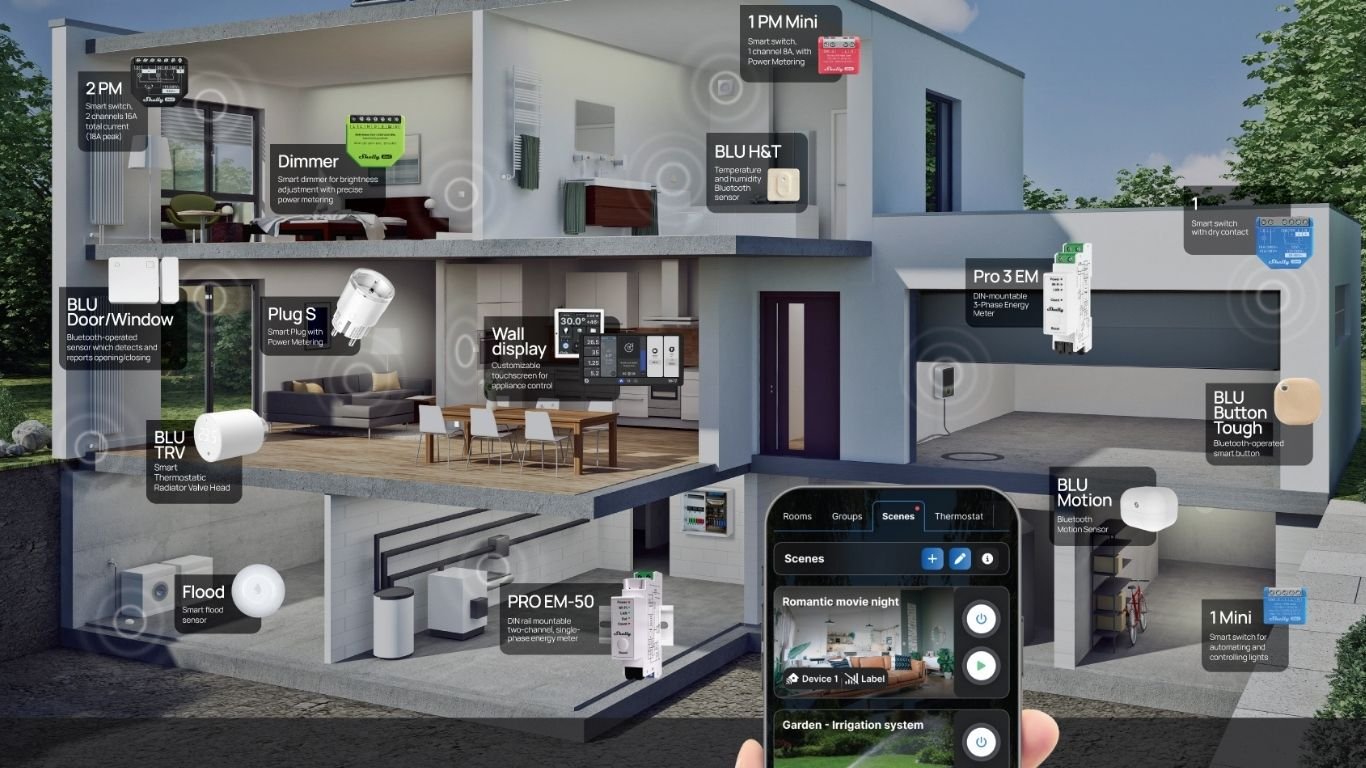
- Whole-home monitoring: For understanding total household demand and import/export patterns. The Shelly Pro 3EM is documented for compatible three-phase systems and provides power and energy measurement features; confirm the regional model and installation requirements.
- Circuit-level monitoring: For separating major circuits or categories. Shelly EM Gen4 uses current transformers for compatible circuit measurement; the EM Mini Gen4 is a compact option for suitable installations. Check ratings, conductor arrangements and compatibility before selection.
- Measure and control: For a compatible load where remote switching or automation is also needed. Shelly 1PM Gen4 combines measurement with relay control, while the 1PM Mini Gen4 is intended for compatible, space-constrained installations. Verify load type and published ratings.
- Plug-in appliance monitoring: For suitable plug-in devices that can be monitored without opening a distribution board. Shelly Plug M provides monitoring and automation for compatible loads within its published limits; use the correct local plug version.
For fixed mains equipment, distribution boards and hardwired circuits, installation and selection should be handled by a qualified professional. Never choose a device solely because its maximum wattage appears higher than an appliance's nameplate value: electrical ratings, load type, current-transformer placement, phase configuration, enclosure requirements and local regulations all matter. Consult the official Pro 3EM documentation, EM Gen4 documentation, EM Mini Gen4 documentation, 1PM Gen4 documentation and Plug M documentation for current specifications.
A 7-Day Home Energy Challenge
- Day 1—Establish the baseline: Record whole-home kWh, current tariff information and the main household activities.
- Day 2—Check the base load: Review overnight demand and list equipment that remains powered. Do not switch off essential, safety-critical or medically necessary equipment.
- Day 3—Review heating and cooling: Compare demand with operating hours and outdoor conditions. Note thermostat settings and unusual weather.
- Day 4—Investigate water heating and charging: Look for shower, hot-water and EV-charging patterns where applicable.
- Day 5—Measure kitchen and laundry loads: Test suitable plug-in devices individually or compare circuit data with actual use.
- Day 6—Look for unnecessary runtime: Identify equipment operating longer or more often than intended, without disabling required functions.
- Day 7—Choose one evidence-based action: Adjust a schedule, investigate a suspected fault, review a setting or plan further circuit-level measurement.
FAQ: Finding the Biggest Electricity Users
What appliance uses the most electricity?
There is no universal winner. Electric heating, cooling, water heating, EV charging, dryers and other loads may dominate depending on power, runtime, climate, building characteristics and household behavior. Measure your home to find the actual answer.
Does a refrigerator use the most electricity overnight?
Usually, an overnight graph shows the combined base load, not one automatically identified appliance. Refrigerators and freezers cycle, but networking equipment, pumps, controls, chargers and standby devices may also contribute. Circuit or appliance-level measurement can narrow the possibilities.
Can a smart meter tell me which appliance is using electricity?
A smart meter can provide useful whole-home readings, depending on the utility and data access available. It generally does not prove which individual appliance caused every reading. Circuit and appliance-level measurement may be needed for attribution.
What is the difference between kW and kWh?
kW measures the rate of electricity use at a moment in time. kWh measures the accumulated energy used over a period. Bills are generally based on kWh, so runtime matters as much as power.
How can I find what is consuming electricity overnight?
Start with whole-home data during a period when the household is inactive. Then list equipment that should remain on, compare likely circuits and use suitable plug-in or professionally installed measurement for individual loads. Treat the graph as an investigation guide rather than an automatic appliance label.
The Best Answer Is the One You Measure
The question “what uses the most electricity at home?” is less useful when it produces a generic list than when it starts a measurement process. Separate total household energy from electricity, distinguish kW from kWh, and follow the House → Circuit → Appliance → Action path. With that framework, your own data can show whether the priority is heating, cooling, water heating, charging, laundry, refrigeration, standby demand or something unexpected.

Comments 0