
Start with the problem, not the product
If you are new to smart home devices, the easiest way to choose a first setup is to ask: What do I want to fix? That question is more helpful than starting with a model name. Some people want one lamp to turn on automatically. Others want leak alerts, better control over a light switch, or a simple way to see where electricity is being used.
This guide compares the most beginner-friendly device types: smart plugs, relays, dimmers, flood sensors, door/window sensors, and energy meters. The goal is to help you match the device to the job, then think about setup complexity second. In general, plug-in devices are the easiest starting point, while wired devices usually need more planning and installation care.
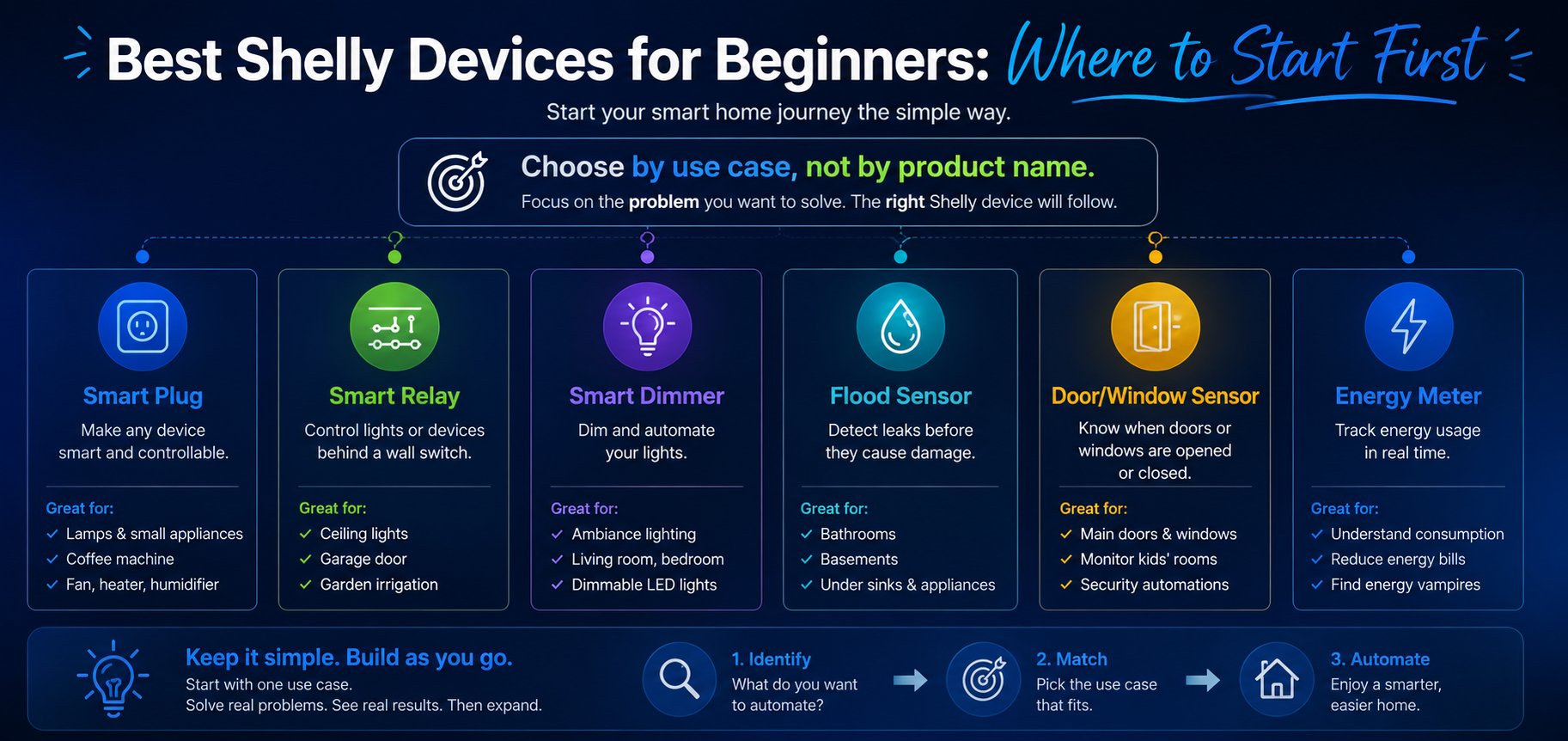
The best first Shelly device by use case
For beginners, the right starting point depends on the kind of problem you want to solve. A smart plug is usually the simplest first project. A relay is better when you want to control an existing wired light or appliance. A dimmer makes sense only when the lighting setup is compatible. Flood sensors and door/window sensors are often the easiest safety or status devices. Energy meters are useful, but they usually make more sense once you already know what you want to track.
If you want the easiest first setup: choose a smart plug
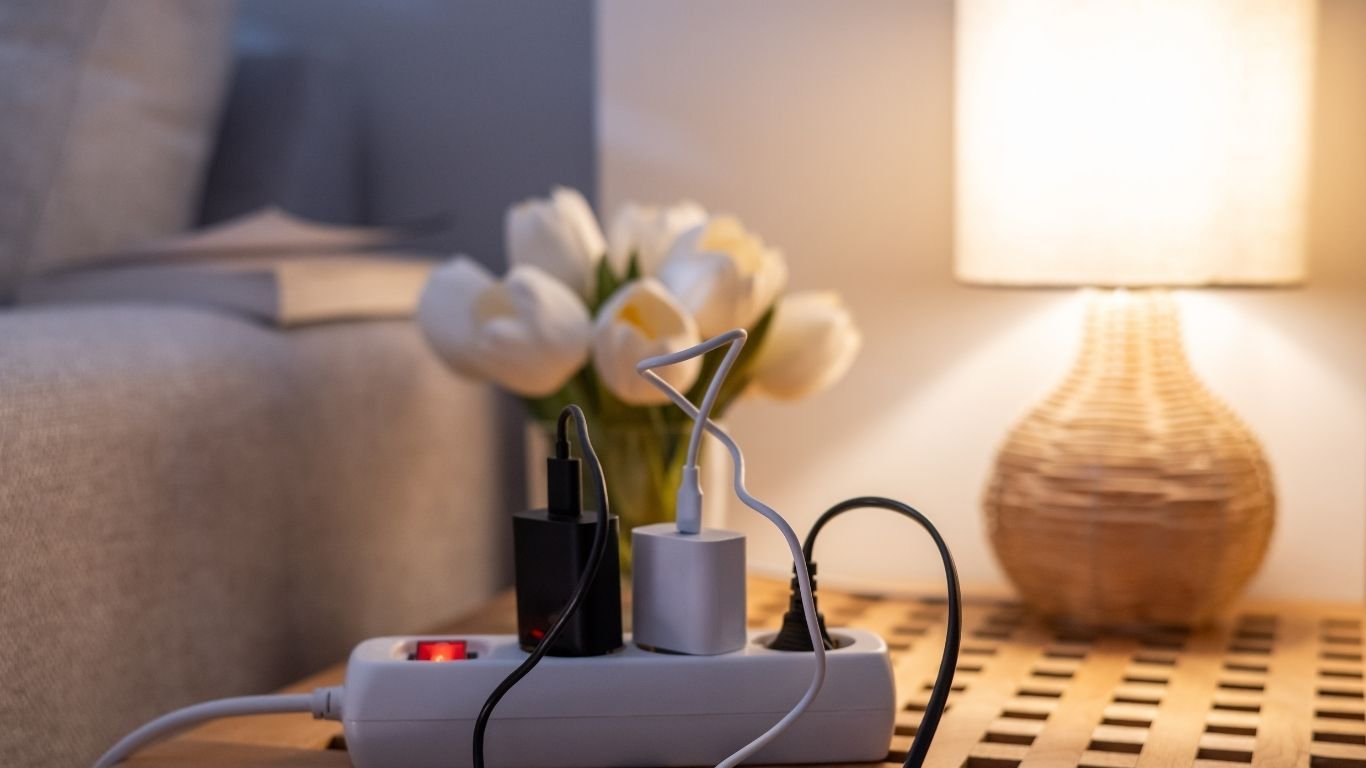
For a complete beginner, a smart plug is often the easiest first smart home device. It plugs into a wall outlet, then your lamp, fan, or small appliance plugs into it. That makes it a simple way to automate one thing without opening a wall box or changing wiring. The Shelly Plug S is a good example because it offers Wi‑Fi connectivity and power metering in a plug-in format.
Smart plugs are a good fit if you want a first win, such as scheduling a lamp, turning off a forgotten appliance, or checking how much power a device uses. If you are asking “where should I start with Shelly?” this is usually the most forgiving place to begin.
- Best for lamps, fans, or other plug-in devices
- Usually the simplest setup for beginners
- Good when you want automation without wiring
- Helpful if you also want basic power monitoring
If you want to control an existing light or switch: choose a relay
A relay is the right choice when you want to control something that is already wired into the wall, such as a ceiling light or a fixed appliance. The Shelly 1 is a Wi‑Fi-operated relay intended for in-wall installation. That makes it more flexible than a smart plug, but also more involved to install.
For beginners, the main difference is simple: a smart plug is plug-in and easy to move, while a relay is built for in-wall use and needs more installation consideration. If you want to automate a hardwired light, a relay may be the better match. If you only want to control a lamp or appliance, a smart plug is usually the easier first choice.
If you want lighting comfort and scene control: choose a dimmer
A dimmer is useful when you want to adjust brightness instead of just switching a light on or off. That can make sense in living rooms, bedrooms, or spaces where softer lighting feels better at certain times of day. The Shelly Dimmer 0/1-10V is designed for compatible lighting systems, which means compatibility matters more here than with a basic smart plug.
For beginners, the key question is not “Do I want a dimmer?” but “Does my lighting setup support dimming?” Some bulbs and fixtures do, and some do not. If you skip compatibility checks, a dimmer can become a frustrating first purchase. That is why a dimmer is usually a better second-step device than a first one unless you already know your lighting system supports it.
- Useful for softer, adjustable lighting
- Requires compatibility with the bulb or lighting load
- Better for users who already know their lighting type
- Not the easiest first choice if you are unsure what your fixtures support
If your priority is protection: choose a flood sensor
A flood sensor is a strong beginner option if your main goal is to catch water problems early. The Shelly Flood is designed to detect water presence and trigger alerts through connected smart home systems. That makes it useful in places where small leaks can turn into bigger damage.
Leak detectors are commonly placed near sinks, water heaters, and appliances where water damage can occur. For many households, this is one of the simplest meaningful first automations because the device does one clear job: warn you early.
“The best beginner smart home project is often the one that prevents a real household problem, not the one with the most features.”
If you want simple security or status detection: choose a door/window sensor
A door/window sensor is another easy entry point because it tells you whether something is open or closed. The Shelly Door/Window detects whether a door or window is open or closed. That makes it useful for simple alerts, routines, and status-based automations.
For example, you could use a contact sensor to trigger a notification if a window opens, or to turn on a light when a door is opened at night. It is also a good beginner device because it is usually less intimidating than wiring-based automation. If you want a first smart home device that is small, focused, and easy to understand, this is a strong candidate.
- Good for alerts when a door or window changes state
- Can help with routines, reminders, or basic security
- Easy to understand because the device has one simple job
- Often a nice first step before more advanced automations
If you want to understand electricity use: choose an energy meter
An energy meter helps you see where electricity is being used. The Shelly EM 120A measures electricity consumption of connected circuits or appliances. That can be useful if you want to identify a power-hungry device, compare usage over time, or simply understand your home better.
This is a useful tool, but it is often a better second-step purchase than a first one. Why? Because an energy meter is most helpful when you already have a specific question, such as “What is using the most power?” or “Does this appliance run more often than I thought?” Energy audits are designed to identify where energy is being used and where reductions may be possible, and home energy monitoring follows the same general idea.
Choose by problem, not by product name
If you are unsure where to start, use this simple rule: match the device to the problem. That keeps you from buying something advanced before you need it. It also helps you avoid the common beginner mistake of choosing based on a product name rather than on the real-world job it needs to do.
- I want one easy win: start with a smart plug.
- I want better lighting: choose a relay for an existing wired light, or a dimmer if your lighting supports dimming.
- I want leak protection: start with a flood sensor near a sink, water heater, or appliance.
- I want simple security or status alerts: use a door/window sensor.
- I want to see power usage: choose an energy meter, or a smart plug with metering if the device is plug-in.
What beginners should check before buying
Before you buy, check a few basics so your first project stays simple. First, decide whether the device is plug-in or in-wall. That one detail changes the difficulty level a lot. Second, verify compatibility with the thing you want to control, especially for dimmers and lighting loads. Third, make sure your Wi‑Fi coverage is strong enough where the device will live. Fourth, confirm any power or wiring requirements, including whether a neutral wire is needed where relevant. Finally, think about whether you want a quick temporary setup or a more permanent installation.
- Is it for a plug-in device or a wired circuit?
- Does it match the bulb, load, or appliance you want to control?
- Will Wi‑Fi reach the installation spot?
- Do you understand the wiring requirements before opening anything up?
- Is this a simple first project, or a better second-step upgrade?
Beginner-friendly starter combinations
If you want a simple starting plan, think in small combinations rather than a whole-home system. A smart plug plus a flood sensor gives you one convenience project and one protection project. A smart plug plus a door/window sensor can automate a lamp based on room use. A relay plus a door/window sensor can be useful for a wired light in a hallway, entryway, or stairwell. If you care about electricity use, a smart plug with metering is often the easiest first step, while a dedicated energy meter makes more sense when you want to monitor a specific circuit or appliance more closely.
- Easy first win: smart plug for a lamp or fan
- Protection first: flood sensor near a sink or appliance
- Entryway automation: door/window sensor with a nearby light
- Wired lighting project: relay for an existing fixed light
- Power-awareness project: metering plug or energy meter
The safest first Shelly choice for most beginners
For most beginners, the safest and easiest first choice is a smart plug, especially if you want to automate a lamp or small appliance without wiring. If your real problem is a leak, start with a flood sensor. If you want to control a fixed light, a relay may be the right tool, but it comes with more installation complexity. If you want adjustable lighting, a dimmer can be great, but only when the lighting setup is compatible.
The best first Shelly device for beginners is not the one with the most features. It is the one that solves a real problem with the least friction. Start small, solve one useful thing, and build from there.
Comments 0