
A holiday home that still needs looking after when no one is there
If you own a holiday home or rental property that sits empty between visits, the main problem is rarely what you can see during a guest changeover. It is what happens in the quiet gaps: a slow leak under the sink, a damp spell after rain, a cold snap that threatens pipes, or a heater that keeps running when it should not. That is where smart holiday home monitoring becomes less of a tech project and more of a practical property-management habit.
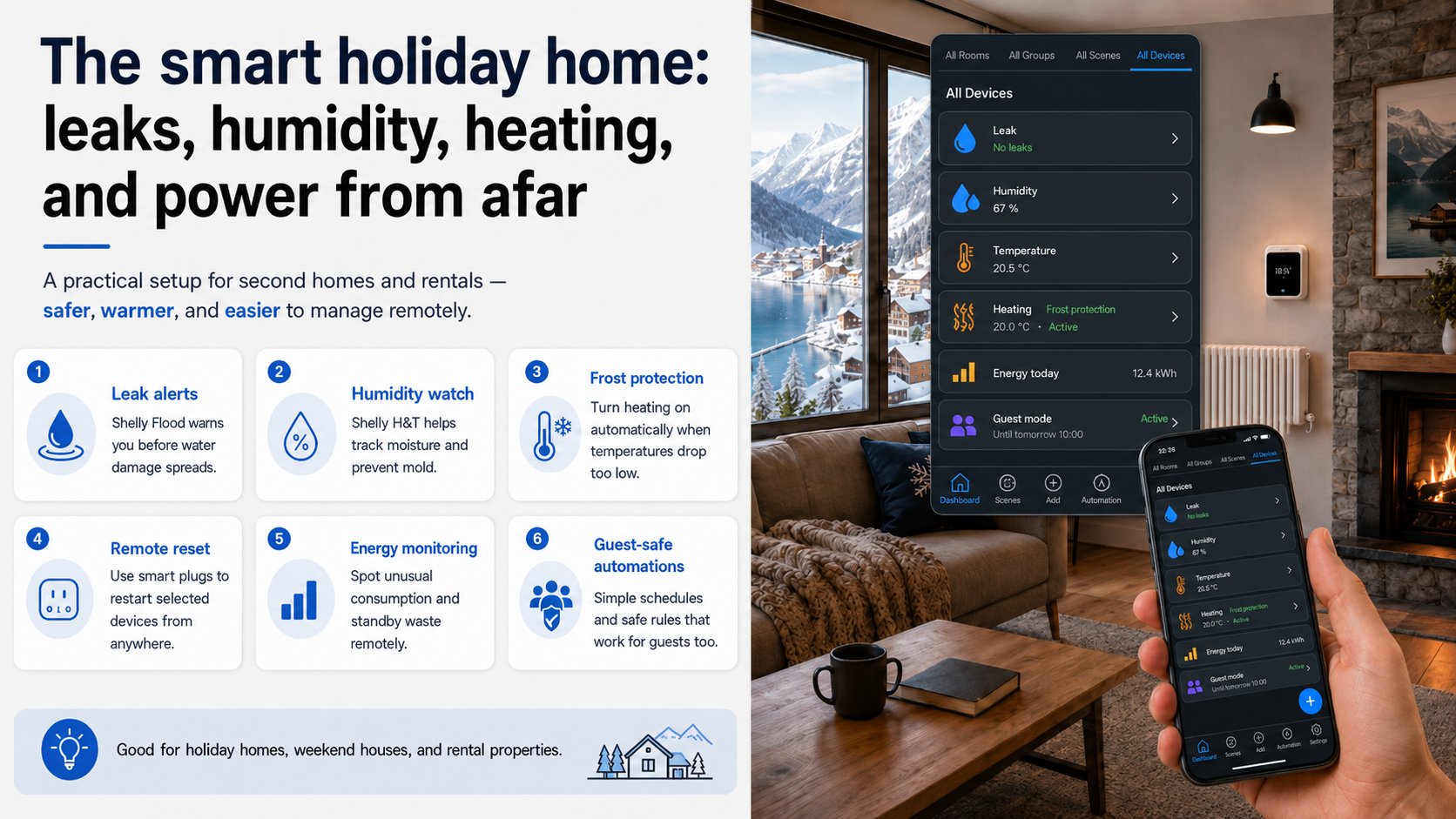
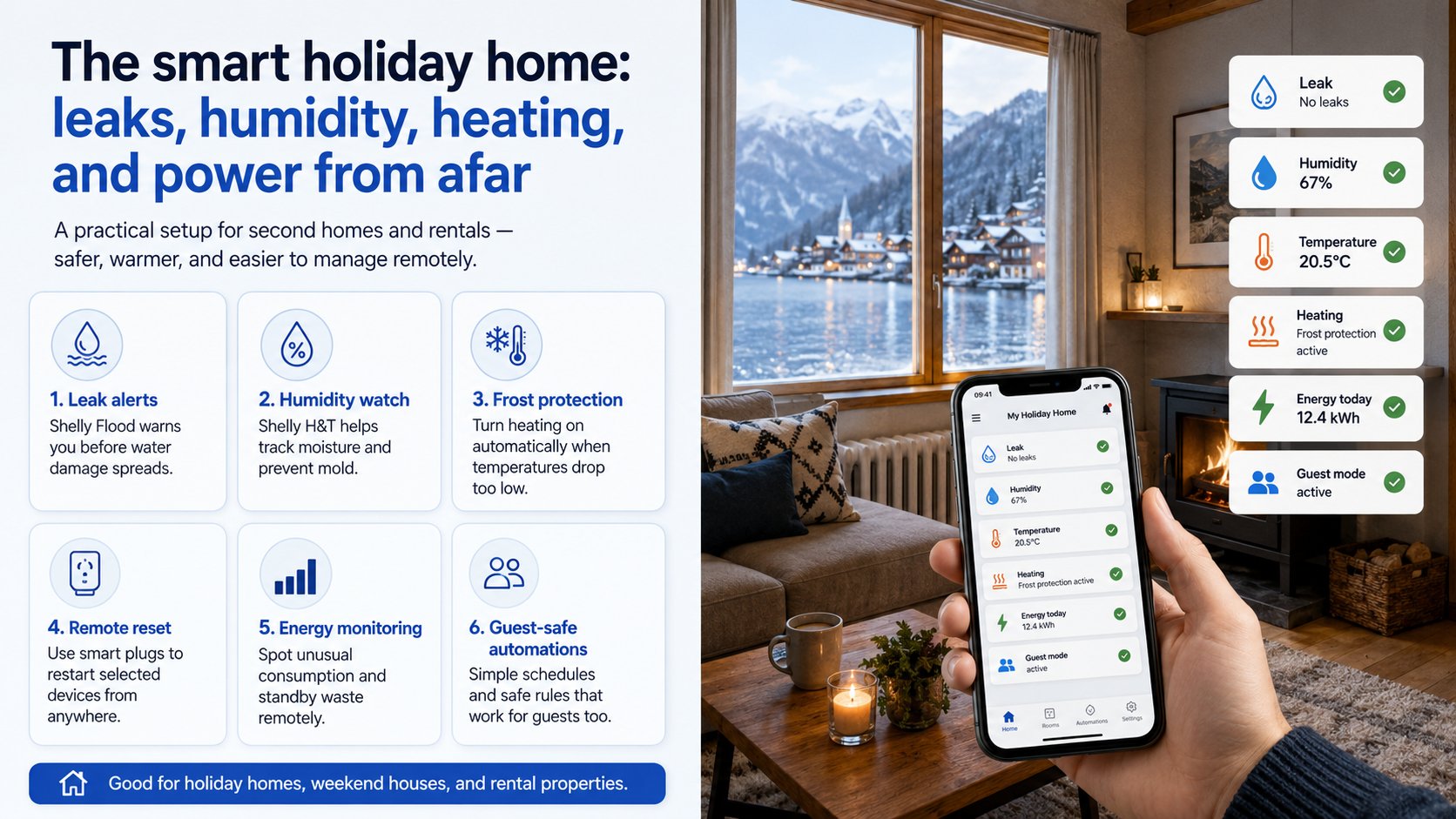
I like to think of it as a lightweight set of eyes and ears. A leak sensor can warn you before water spreads, a temperature and humidity sensor can show when a room is getting clammy, a smart plug can let you restart a stubborn device without a long drive, and energy monitoring can reveal when something is running that should have been off. None of that replaces inspections, but it can shorten the time between problem and response.
The best part is that these tools do not need to be intrusive. Done well, they protect the building without changing the guest experience. The goal is visibility and timely action, not constant tinkering.
The device stack: what each part is for
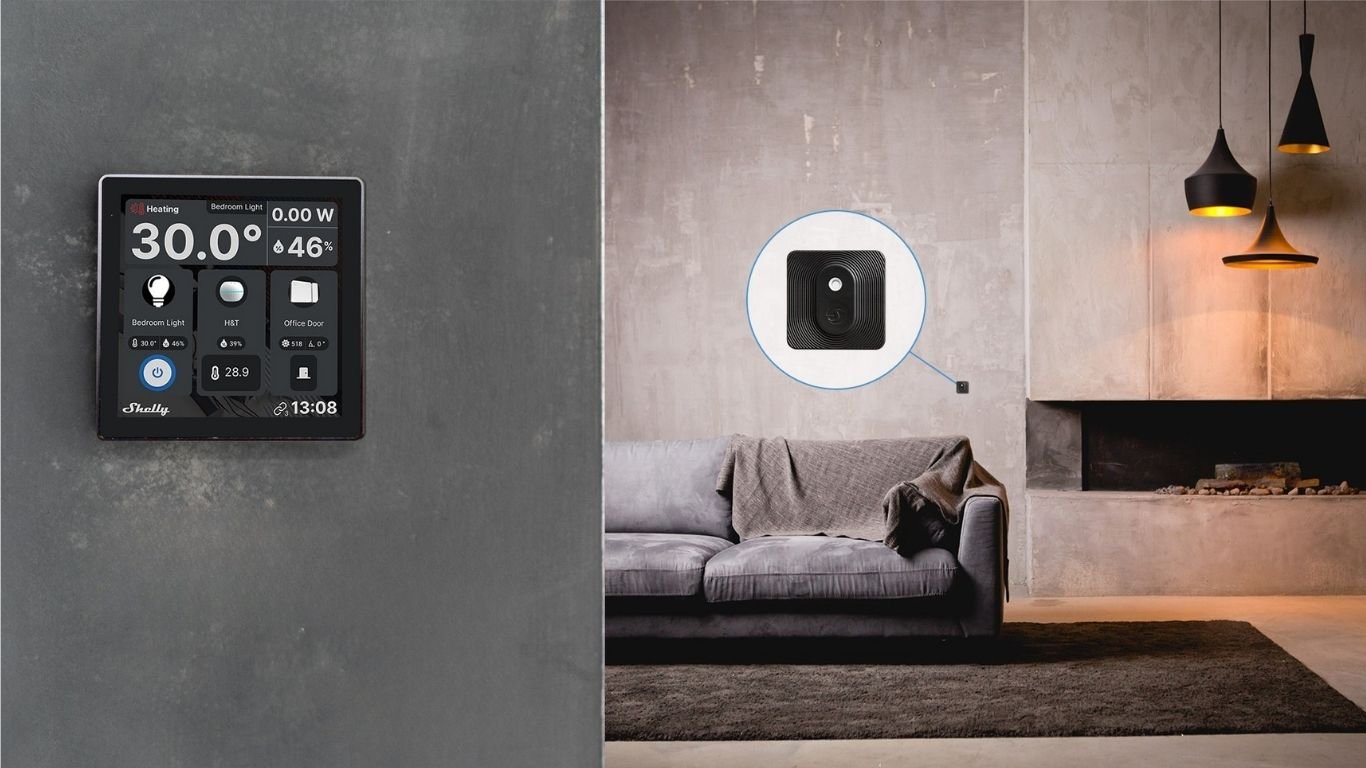
For a remote property, the simplest useful setup usually has four parts. First, a leak sensor such as Shelly Flood placed where water would appear first. Second, a temperature and humidity sensor like Shelly H&T to track the conditions that lead to damp, condensation, or frost risk. Third, a smart plug that can switch a single appliance on or off remotely and report power use, such as Shelly Plug S. And fourth, some form of energy monitoring for the larger picture, such as a meter that shows what the property is consuming overall.
Together, these do not make a house “automated” in a flashy sense. They make it observable. That matters when you are trying to manage a second home from several hours away, or from another country, and you need to know whether the building is behaving normally.
Leak alerts that buy time before damage spreads
Water damage is one of the easiest risks to underestimate in an empty home. A drip under a kitchen sink can run for hours before anyone notices. A small leak near a boiler or water heater can soak cabinetry, flooring, and insulation long before it becomes visible. That is why a smart leak detector for holiday home use is most valuable where water would collect first: under sinks, behind washing machines, beside dishwashers, near the boiler, under the utility room pipework, and in any low point where water would pool.
The advantage is not just the alarm itself. It is the time it gives you. If a leak sensor sends an alert while the property is empty, you can call a local contact, arrange access, or shut off water before the issue becomes a much larger repair. The EPA notes that moisture problems and poor ventilation can contribute to mold growth and indoor air quality issues, so even a short delay can matter.
Humidity and temperature: spotting damp, condensation and frost risk
Humidity monitoring for second homes is often the difference between guessing and knowing. If a room regularly trends damp after rain, or if moisture rises when the property has been closed up, that can point to poor ventilation, an unseen leak, or simply a building that is not drying out between stays. The CDC warns that mold can grow when moisture is present and should be addressed promptly. A warm indoor environment can also help reduce damp and condensation problems. Temperature matters just as much. If the property sits empty through winter, a falling indoor temperature can be your first sign that heating has failed or that a space is no longer protected. Keeping safe temperatures on in cold weather helps reduce the risk of frozen pipes.
In practice, you are looking for change, not one universal number. A sudden rise in humidity after a storm may mean the house is not drying properly. A cold room near an outside wall may need attention before winter really sets in. If a guest has just left and the readings stay high for longer than expected, that can be a clue to open vents, run a dehumidifier, or inspect for a leak before the next booking.
Frost protection without wasting energy
For a property that sits empty for long periods, frost protection should be simple and conservative. The aim is not to overheat the building; it is to keep it above a safe level and avoid the kind of temperature drop that can lead to frozen pipes. That is why remote heating control for rental property is useful, provided it is set up with restraint. If the indoor temperature falls below your chosen safety threshold, you can switch heating on remotely or allow a basic automation to do it for you.
What matters most is that the heating strategy fits the building. A well-insulated cottage may need little intervention. A draughty annex, loft conversion, or pipe-heavy utility room may need closer monitoring. The safest setups are usually the least clever: a simple low-temperature backup mode, a clear alert if temperatures fall too far, and a manual override when you want to change the schedule yourself.
Remote reset and power cycling for stubborn devices
Every remote owner eventually encounters a device that freezes, stalls, or loses connection after an outage. This is where a smart plug becomes useful. A smart plug automation for holiday home use can let you switch a single non-essential device off and on again without visiting the property. That might be a router, a dehumidifier, a small pump, or another appliance that benefits from a clean restart. Smart plugs can also show power use, which helps confirm whether the device is actually drawing power once it is back on smart plug control and power monitoring.
The key word is non-essential. Remote power cycling is handy when the target device is safe to restart. It is not a license to cut power to anything that must stay continuously on, and it should never be used casually on heating, refrigeration, medical equipment, alarms, or systems that need a controlled shutdown.
Energy monitoring: knowing what is on, what is idle, and what is costing money
Energy monitoring for rental property is not only about saving money, although it can do that too. It is also a quick way to see whether the building is behaving as expected. If electricity use jumps while the home is supposed to be empty, that can suggest a heater left on, a failed appliance, a stuck pump, or a forgotten device drawing power in the background. Consumer guidance on reading electric use notes that tracking consumption patterns can help identify unusual use and waste.
For a second home, that kind of visibility is valuable because it turns an annual bill into a clue. You may not need a minute-by-minute dashboard. Often, just knowing that the baseline load is stable, or that it changed after a storm, is enough to prompt a phone call or a closer look on the next visit.
Guest-safe automations that protect the property without annoying visitors
The best automations are the ones guests never notice. A leak sensor under a sink is invisible. A temperature alert sent to the owner is invisible. A mild frost-protection mode that keeps pipes safe is invisible. That is the standard to aim for in a short-term let, where guest safety, maintenance, and clear arrangements should stay front and center.
What should be avoided? Anything that changes the guest experience without a good reason: turning lights or heating on and off aggressively, closing vents automatically, locking people out of controls they need, or shutting down essential services unexpectedly. Keep manual override in place so a guest can still adjust a heater, open a vent, or use an appliance normally. The more invisible and reversible the automation is, the better it usually works in a rental setting.
- Use alerts for owners and managers, not for constant interventions that guests can notice.
- Keep heating automations safety-focused and simple.
- Reserve remote power cycling for non-essential equipment.
- Allow manual control wherever guests are expected to interact with the property.
- Avoid any automation that could cut power to essentials or create confusion during a stay.
A simple setup plan for owners who are rarely on site
A practical remote-property routine does not need to be complicated. Start by placing leak sensors at the most vulnerable points and making sure each alert reaches a phone you actually check. Add temperature and humidity monitoring in the rooms that tell you the most about the house’s condition: the kitchen, bathroom, utility room, loft, or any space that tends to feel cold or damp. Then decide which single appliance, if any, would benefit from remote switching, and keep that list short.
After that, define a few meaningful thresholds. You do not need universal numbers for every home. What you need are alert points that suit your building and climate: too cold for comfort, too cold for pipe safety, or humidity that stays high long enough to suggest a problem. If the house has a predictable pattern after storms, let that guide your settings. If one room regularly behaves differently from the rest, treat it as its own case.
Testing matters as much as installation. Check alerts after you set everything up, then repeat the test regularly so you know the system still works when it needs to. A quick monthly or seasonal check is often enough for a small holiday home, with extra verification before winter and before long vacant periods. Before a guest arrival, confirm that heating is operating normally, no alerts are active, and any remote-power devices are in the correct state. After departure, make sure the property returns to its empty-house settings and that the next alert will still reach you.
This kind of routine sounds minor, but it is what keeps the setup from becoming forgotten equipment. A smart holiday home monitoring system is only useful if it keeps being checked.
What this setup can and cannot do
There is a useful story hidden in all this: a storm passes, humidity rises in the utility room, your phone shows the change, and you decide to turn the heat up remotely and ask someone local to take a look. Or a pump locks up after a power cut, and a smart plug lets you restart it without a long drive. Or an energy reading jumps when the house should be quiet, giving you an early warning that something is not right. Those small interventions can save time, money, and stress.
But the limits matter too. Smart home devices reduce risk and improve response time; they do not eliminate risk. They do not replace insurance, routine inspections, plumbing and electrical maintenance, or proper guest communication. They are best treated as a practical toolkit: a way to see more, react faster, and keep a holiday home or rental safer between visits.
For remote owners, that is often enough. The property stays quieter, the alerts are clearer, and the next time you open the door, there is a better chance that the house has simply been waiting for you rather than creating problems in your absence.
Comments 0