
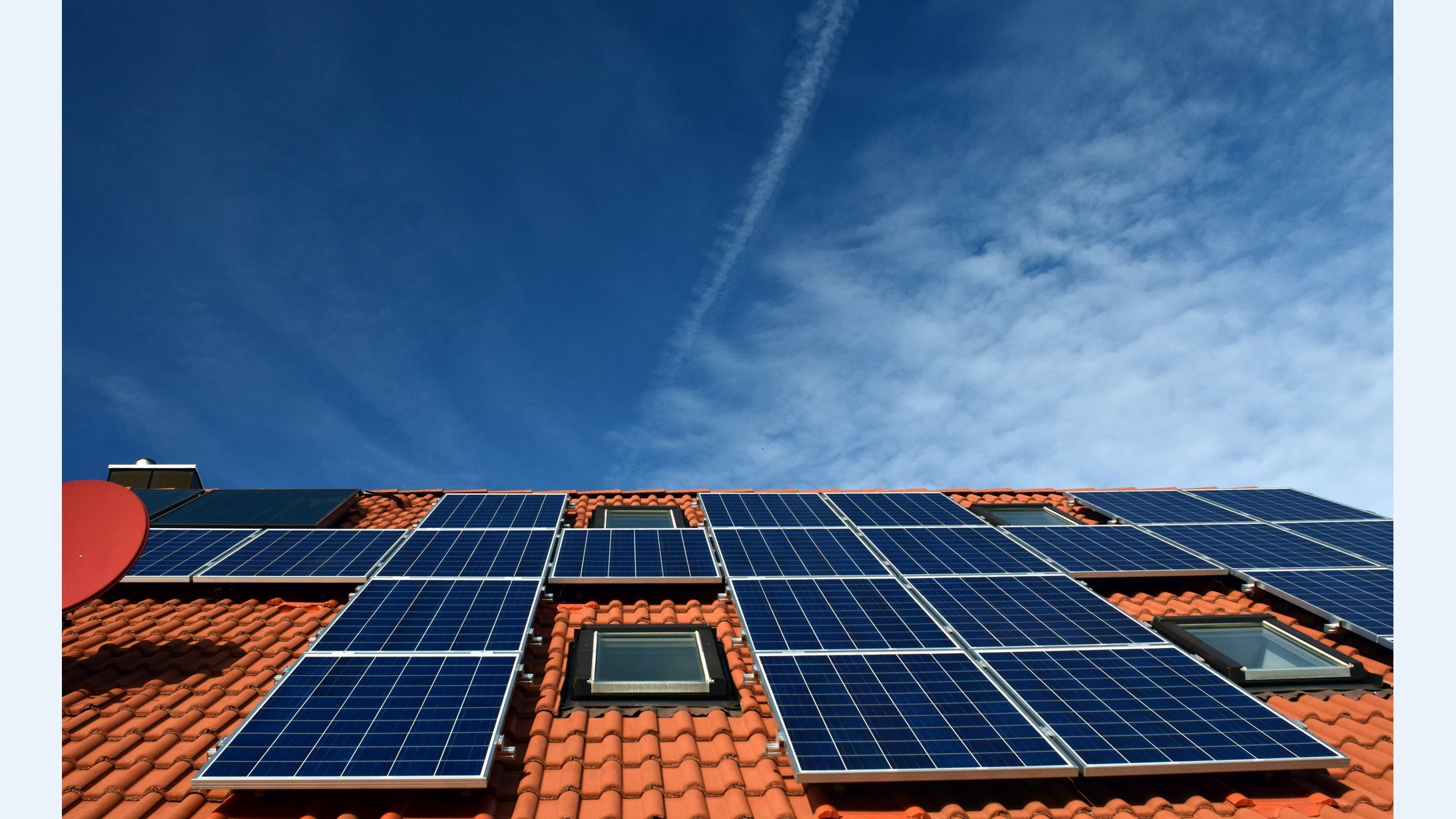
It is a familiar solar-home pattern: the panels are producing strongly on a bright afternoon, but the house is empty. Electricity flows out to the grid. Later, when the household returns and starts cooking, washing clothes or charging a car, the panels produce little or nothing, so electricity flows back in.
This is not necessarily a fault. Solar generation and household demand often happen at different times. The practical question is whether some flexible demand can be moved into solar-production hours. That process is best approached as produce, measure, detect surplus, automate and verify—not as a race to turn on every appliance whenever the sun is shining.
The U.S. Department of Energy explains that home solar electricity can be used directly, stored, sent to the grid or directed to suitable loads, depending on the system. The most useful strategy for any home depends on its wiring, appliances, tariff and export arrangement.
What is solar self-consumption?
Solar self-consumption is the share of your solar generation that is used by your home rather than exported. A commonly used calculation is:
Solar self-consumption (%) = solar energy used on site ÷ total solar energy generated × 100
For example, in a clearly labelled illustrative scenario, a home generates 20 kWh on a sunny day and uses 8 kWh of that generation directly. Its solar self-consumption is 8 ÷ 20 × 100 = 40%. The remaining 12 kWh may be exported, stored or used by another controlled load, depending on the system and the timing of the measurements.
Why can a home export solar power and still import electricity?
Grid export and grid import are measured over time, while power is being generated and consumed moment by moment. At 1 p.m., the panels may produce 5 kW while the home uses only 1 kW, leaving roughly 4 kW available to export. At 8 p.m., generation may be zero while the home uses 3 kW, so it imports power.
Weather, seasonal daylight, work schedules and appliance cycles make this mismatch normal. Exported electricity is not automatically “wasted”: it may be compensated under a local arrangement or support the wider grid. However, if your goal is to use more of your own generation on site, shifting suitable demand can reduce avoidable imports later. The financial value depends on import prices, export compensation, tariffs and the cost of any equipment, so higher self-consumption does not automatically mean the highest financial return.
Start with measurement: generation, demand, import and export
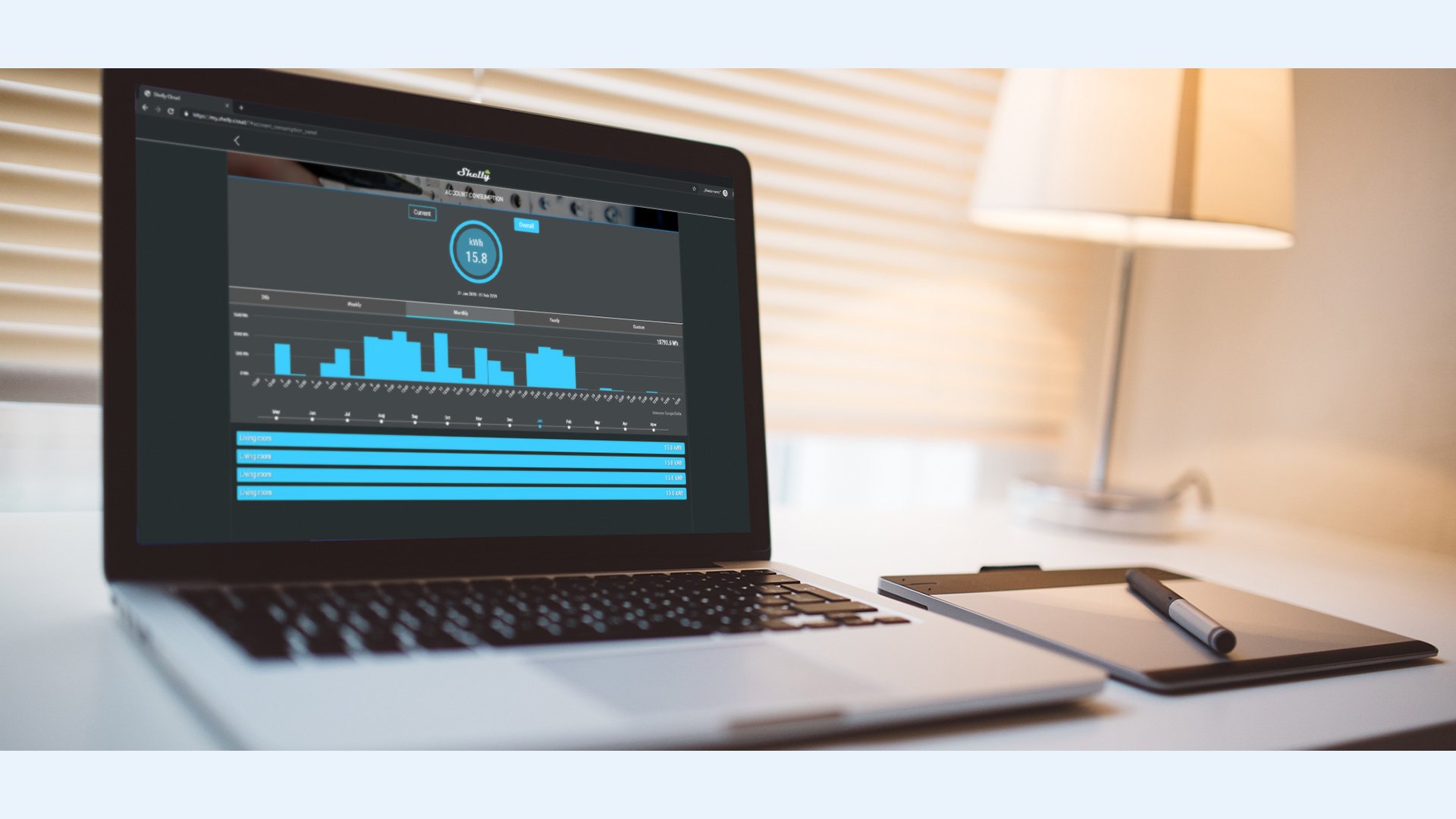
Before automating anything, establish what your system is actually doing. Useful data points include:
- Solar generation: energy produced by the inverter, usually recorded in kWh, with live output often shown in kW.
- Household demand: the power currently used by the home and the energy used over a period.
- Grid import: electricity flowing from the grid into the property.
- Grid export: electricity flowing from the property to the grid.
- Flexible-load consumption: the energy used by water heating, EV charging, pumps or other loads you may be able to schedule.
Inverter data can show generation, but generation alone does not prove that surplus is available at the grid connection. A home may be producing 3 kW while simultaneously consuming 3 kW. Conversely, it may produce 3 kW and use only 1 kW, with the remainder exporting. Meter placement and the installation’s electrical configuration matter. Current-transformer orientation, phase assignment and device configuration can affect whether import and export are interpreted correctly; the Shelly Pro 3EM documentation describes these considerations for that product.
Detect solar surplus before switching a load
Solar surplus is the generation available after current household demand has been accounted for. In a simple single-phase example, the panels produce 4 kW and the home is using 1.5 kW. About 2.5 kW may be available for export or a flexible load, subject to system limits and measurement timing.
For automation, measured export is often more useful than production alone because it reflects both sides of the balance. Even then, an instantaneous reading can change quickly as clouds pass or appliances start. A more dependable rule may require export above a threshold for several minutes, followed by a minimum run time and a lower threshold for switching off.
Which household loads can use more solar energy?
The best candidates are loads that are flexible in timing, have a predictable power demand and can be controlled through an approved interface. The table below is a starting point, not a wiring instruction.
- Water heating: often flexible, but the heater’s thermostat, thermal cut-out, anti-legionella or other hygiene routines must remain operative.
- Washing machines and dishwashers: potentially schedulable, but many models will not resume a cycle after power is restored. Use the manufacturer’s supported delay-start or control function where available.
- EV charging: useful for absorbing daytime generation when the vehicle is home; charger settings, cable ratings and installation requirements are separate from solar monitoring.
- Pool pumps and dehumidifiers: may tolerate scheduling if the equipment and circuit are suitable.
- Battery storage: stores energy for later use, but introduces additional equipment, controls, costs and installation considerations.
Using excess solar energy for water heating
Water heating is a common example of a flexible load. A carefully designed sequence might be: measure export, confirm that export remains above a chosen threshold, enable the heater through an appropriately rated control interface, keep it on for a minimum period, and turn it off only after export falls below a lower threshold for a defined delay.
The lower threshold creates hysteresis: the on and off points are different, reducing rapid switching when available surplus fluctuates. The control must not bypass the heater’s thermostat, thermal cut-out, temperature limits or required hygiene cycle. High-power heaters may require a rated contactor or another approved interface rather than direct switching by a small relay. Electrical installation and changes to fixed wiring should be assessed and completed by a qualified professional in accordance with local requirements. The Department of Energy’s water-heating guidance provides general context, but it does not replace equipment instructions or professional design.
Fixed schedules versus real-time surplus automation
There are two broad ways to shift demand. A fixed schedule is simple and predictable; surplus automation responds to measured conditions. A hybrid approach often works best.
- Fixed schedule: run a water heater, pump or charger during a likely solar window, such as late morning or early afternoon. It is easy to understand but may consume grid electricity on cloudy days or when household demand is high.
- Real-time surplus automation: use measured import/export or an equivalent system signal. It can react to weather and demand, but requires correctly placed meters, dependable communications and carefully designed thresholds.
- Hybrid rule: permit operation only within a time window, require a surplus threshold to be sustained, impose a minimum run time and stop the load before a known evening peak or tariff change.
How Shelly devices can support monitoring and automation
Shelly devices can be considered as components in a measure–detect–automate–verify workflow, but the correct device, wiring arrangement and software logic depend on the installation. They should not be treated as a universal, turnkey solar-surplus system.
The Shelly Pro 3EM is intended for measuring electrical parameters and energy flows in compatible three-phase installations. Its current transformers and placement need to match the intended measurement points, and the documentation should be checked before implementation.
The Shelly EM Gen4 may suit monitoring selected circuits or arrangements, subject to its current specifications, limits and the measurement question being asked. The Shelly 1PM Gen4 combines switching with power or energy measurement for compatible loads within its published limits. The Shelly Plug M can be considered for suitable plug-in loads within its rating.
These products may provide useful data or control points, but whether they can act on a particular solar-surplus signal depends on the complete installation, integrations and configured logic. Confirm current specifications in the Shelly documentation and avoid assuming that a particular app, script or integration supports a feature unless it is documented and tested.
Avoid rapid switching and conflicting loads
A good automation rule is conservative. Consider:
- Hysteresis: use a higher threshold to start and a lower threshold to stop.
- Activation delays: require surplus to persist for several minutes rather than reacting to every brief fluctuation.
- Minimum on and off periods: protect appliances and reduce unnecessary relay operations.
- Load priorities: decide whether essential household demand, water heating, EV charging or another load should receive available capacity first.
- Phase awareness: on a multi-phase installation, understand whether the relevant measurement and load are on the same phase and how the meter interprets flows.
- Capacity limits: never exceed the circuit, switch, contactor, cable or appliance ratings.
- Safe failure behavior: decide what happens if the meter, network or controller becomes unavailable.
Can you increase solar self-consumption without a battery?
Yes. A battery is one way to move solar energy from one time to another, but it is not required. Without a battery, you can increase on-site use by running suitable appliances during production hours, scheduling water heating, charging an EV when the vehicle is home, operating pumps within their required windows and using measured automation to coordinate flexible loads.
These measures cannot eliminate the natural mismatch between generation and demand. A battery provides a different form of storage and may cover evening or overnight demand, while load shifting uses energy as it is produced. Which approach is appropriate depends on the home’s load profile, equipment, tariff, export arrangement and installation constraints.
Verify whether the changes worked
Automation is only useful if the data shows that it is doing what you intended. Compare representative periods before and after the change, ideally including similar weather and household routines. Track:
- total solar generation in kWh
- solar energy used on site, where it can be derived reliably
- grid import and grid export
- energy used by the shifted load
- start and stop events, including unexpected interruptions
Separate power from energy: kW describes the rate at a moment, while kWh describes energy accumulated over time. Also check for changes in season, cloud cover, occupancy and tariff periods. A lower export figure alone does not prove success if generation was lower; a higher self-consumption percentage may not improve costs if it required expensive equipment or displaced a more valuable export arrangement.
A practical solar self-consumption checklist
- Understand the setup: identify the inverter, phases, main meter, tariff and export arrangement.
- Measure first: collect generation, demand, import and export data rather than relying on sunlight or inverter output alone.
- Find flexible loads: list water heating, EV charging, pumps and appliances that can genuinely be scheduled.
- Check compatibility: confirm appliance restart behavior, control interfaces, ratings and installation requirements.
- Start conservatively: use time windows, sustained thresholds, hysteresis, delays and minimum runtimes.
- Install safely: use approved equipment and qualified help for fixed wiring or high-power loads.
- Verify results: compare generation, on-site use, import and export over representative periods.
Frequently asked questions
Is solar surplus the same as solar production?
No. Surplus is what remains after current household demand is accounted for. Measure the relevant import or export flow wherever possible.
Do I need a battery to increase solar self-consumption?
No. Load shifting, water heating, EV charging and scheduling can increase on-site use without a battery. A battery provides additional time-shifting capability.
Can I heat water whenever solar production is high?
Only when the complete system is suitable and safely controlled. Preserve the thermostat, thermal cut-out and hygiene controls, and use an appropriately rated interface.
Will a smart plug make every dishwasher or washing machine start automatically?
No. Many appliances do not resume after power restoration. Check the manufacturer’s instructions and use supported controls.
Can Shelly monitor solar import and export?
Potentially, with a suitable device and correctly configured measurement arrangement. The Pro 3EM and EM Gen4 should be assessed against the system’s phase layout, meter position and required measurements. Confirm current specifications and implementation details in the official documentation.
Will higher self-consumption always lower my bill?
Not necessarily. Import prices, export compensation, tariffs, weather and equipment costs all affect the result.
What is the difference between self-consumption and self-sufficiency?
Self-consumption measures the share of generated solar used on site. Self-sufficiency measures the share of total household demand covered by solar. They answer different questions.
The central lesson is simple: produce, measure, detect surplus, automate and verify. Once the energy flows are visible, you can decide whether a fixed schedule, measured control, battery or combination of approaches fits your home—without assuming that every sunny afternoon represents available surplus or that every appliance is safe to switch.
Comments 0