
Smart home automations people actually use
Most people do not need a house full of flashy routines. The useful everyday smart home automations are the small ones that remove a daily annoyance: lights that come on when you need them, a bathroom fan that runs long enough to clear steam, a water heater that only works on schedule, or a leak alert that catches a problem early. With scene-based automation, you can set triggers from time, sensors, and device states to make those routines happen consistently.
The best automations are usually the ones you stop noticing. They fit normal routines, help reduce waste, and make the home a little easier to manage. The examples below focus on ordinary household tasks and the Shelly device categories that can handle them, from relays and smart plugs to sensors and roller shutter control.
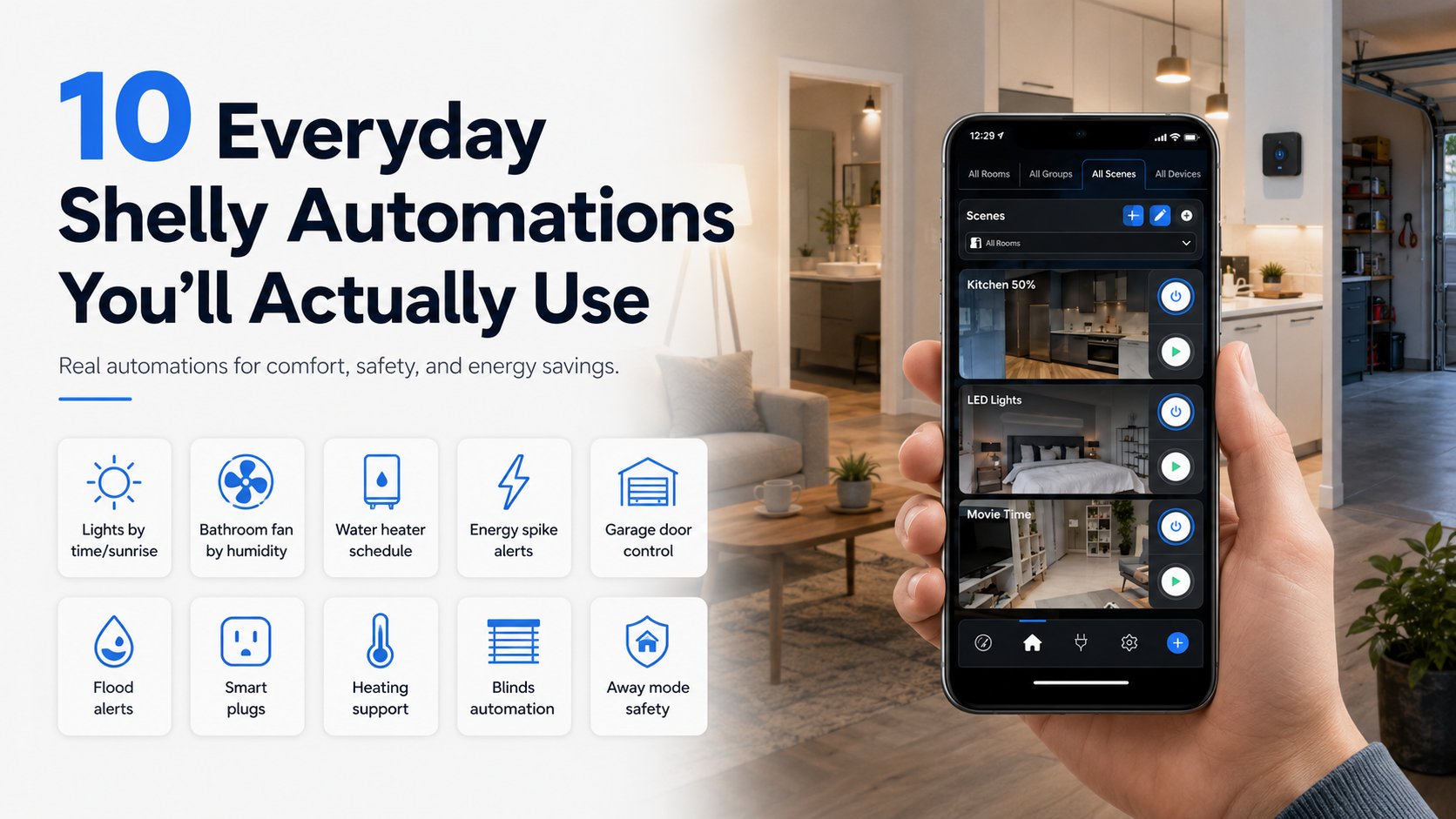
1. Lights that turn on at sunrise or by time of day
A common daily pain point is walking into a dark hallway, kitchen, or entryway with your hands full. A simple lighting automation can turn on lights at sunrise, at a fixed morning time, or at sunset for evening use. In practice, you set a trigger such as "sunrise minus 15 minutes" or "7:00 p.m." and then choose the light or lights that should switch on. Shelly relay and dimmer products are the usual fit here, depending on whether you want on/off control or brightness control.
- Trigger: sunrise, sunset, or a fixed time.
- Action: turn on hallway, porch, or kitchen lights; optionally dim them later.
- Use case: a soft hallway light in the early morning or a porch light that comes on before dark.
- Product fit: a hardwired relay such as Shelly 1 Gen4 for on/off control.
2. Bathroom fan automation based on humidity
Bathroom humidity is one of those problems people live with until they notice mildew, foggy mirrors, or damp paint. A humidity-based automation can switch the fan on after a shower and keep it running until the moisture level drops again. The logic is straightforward: when humidity rises above a set threshold, turn the fan on; when it falls back to a normal range, turn it off. This is a practical use of sensor-driven routines and a relay controlling the fan circuit.
- Trigger: humidity above a set level, often after a shower.
- Action: turn the fan on for ventilation, then switch it off once the room dries out.
- Use case: help reduce moisture buildup in bathrooms and laundry areas.
- Product fit: a relay such as Shelly 1 Gen4 paired with a compatible humidity sensor or automation input.
For many households, the value is not sophistication; it is consistency. The fan runs when it should, not just when someone remembers to flip the switch.
3. Water heater scheduling for predictable hot water use
Leaving a water heater on all day can be convenient, but many homes only need hot water at predictable times. A schedule-based automation can power the heater during morning and evening windows, then shut it down when the household is unlikely to use it. That makes the routine easier to manage and can help households pay closer attention to when electricity is being used, which is a core benefit of energy monitoring and routine control.
- Trigger: a time schedule, such as early morning and early evening.
- Action: power the water heater only during the chosen window.
- Use case: hot water is ready when the household actually needs it.
- Product fit: a hardwired relay such as Shelly 1 Gen4, used only where the load and installation are appropriate.
4. Energy spike alerts so you notice unusual usage
One of the most practical automations is not an action at all, but an alert. Energy monitoring can show when a circuit suddenly pulls more power than usual, which may point to a failing appliance, a forgotten heater, or equipment that was left on by accident. That is exactly where a device like Shelly Pro EM-50 fits: it measures electricity consumption on connected circuits and can support monitoring for unusual usage patterns.
- Trigger: power draw above a normal threshold or a sudden change in usage.
- Action: send an alert so you can check the appliance or circuit.
- Use case: catch a dryer that is behaving oddly, a pump that is running too long, or a forgotten high-draw appliance.
- Product fit: Shelly Pro EM-50 for circuit-level monitoring.
5. Garage door control from your phone or a routine
Garage door control is useful in ordinary life, not just during travel. It can help when you are leaving and realize the door is still open, when a family member needs access, or when you want to fold it into an arrival or away routine. A relay can be wired to the garage door opener so the automation sends the same type of momentary signal that a wall button would. Shelly’s garage door guidance shows this kind of relay-based integration, but it also makes clear that wiring should be done correctly and with safety in mind.
- Trigger: phone command, scheduled routine, or home/away state.
- Action: open or close the garage door opener through a relay pulse.
- Use case: remote access and simple status-based control.
- Product fit: a relay such as Shelly 1 Gen3 used according to the garage-door wiring guidance.
6. Flood alerts for sinks, washing machines, and basements
Flood detection is one of the clearest examples of a useful automation because it solves a problem you would rather catch early than clean up later. A sensor placed near a sink, washing machine, water heater, or basement floor can trigger an immediate alert when water is detected. Shelly Flood is designed specifically for leak detection and alerting, which makes it a straightforward fit for everyday risk points around the home.
- Trigger: water detected at the sensor location.
- Action: send a phone alert or trigger a scene.
- Use case: under-sink leaks, laundry room drips, basement seepage, or appliance hose failures.
- Product fit: Shelly Flood.
7. Smart plugs for lamps, fans, and everyday appliances
Not every device needs rewiring. Smart plugs are a simple way to automate plug-in appliances such as lamps, desk fans, dehumidifiers, or holiday lights. You can set schedules, timers, and remote off functions without touching the fixed wiring in the wall. Shelly Plus Plug S is built for exactly that kind of everyday control and also adds power monitoring for connected appliances.
- Trigger: a schedule, timer, or remote command.
- Action: turn a plug-in device on or off.
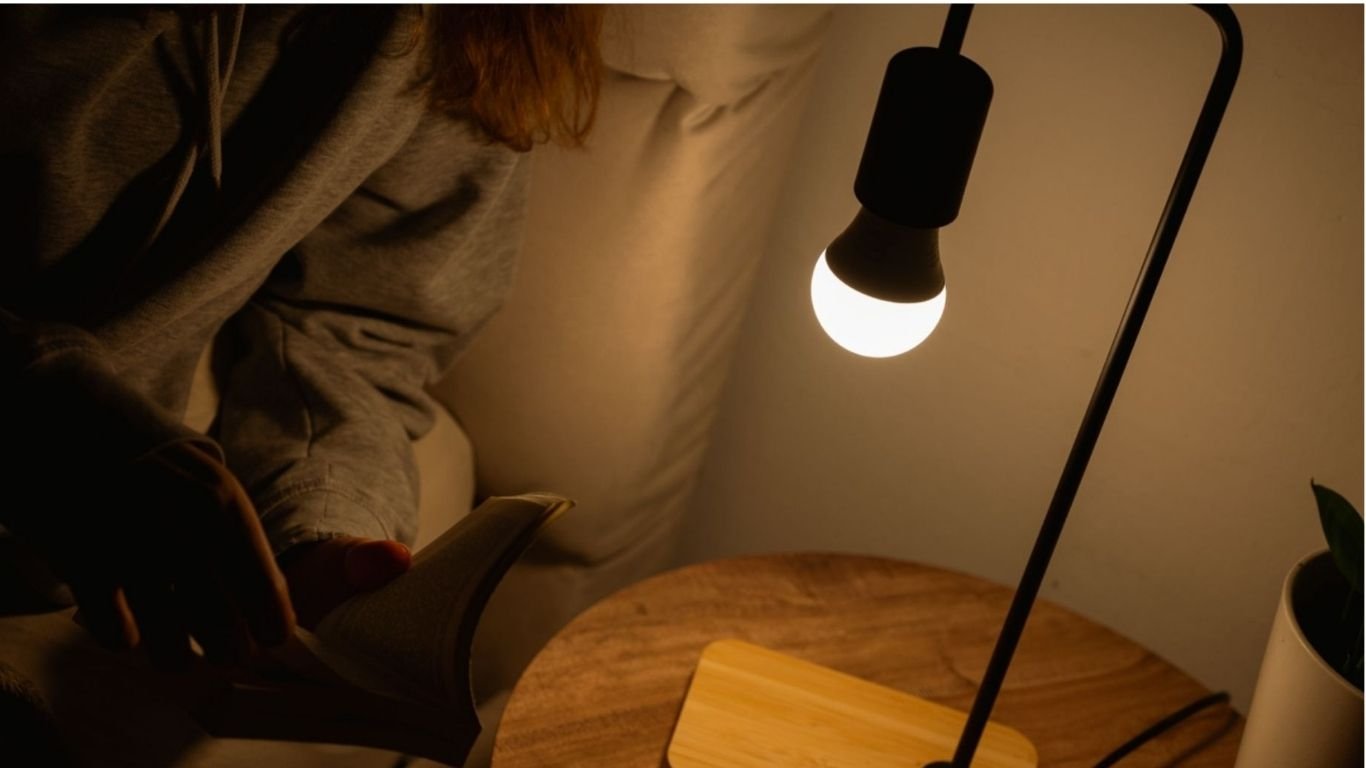
- Use case: a bedside lamp on a night schedule or a fan that runs for a set period.
- Product fit: Shelly Plug S.
8. Heating support that follows your routine
Heating support does not need to be complicated to be useful. A simple routine might warm a room before you get up, then switch off a portable heater when you leave the room or open a window. For plug-in heaters or supplemental heat sources, a smart plug can provide the control layer; for hardwired heating-related loads, a relay may be more appropriate. The main idea is to match the device to a routine rather than leave it running constantly.
- Trigger: time of day, room occupancy, or a window-open state.
- Action: preheat a room before waking or cut power when ventilation is needed.
- Use case: a portable heater in a spare room or a small space that only needs heat on a schedule.
- Product fit: Shelly Plug S for plug-in devices, or a relay such as Shelly 1 Gen3 for suitable hardwired control.
9. Blinds that react to sunlight and temperature
Blinds are one of the easiest ways to make a room feel more comfortable without changing the thermostat. In the morning, they can open with the sun to bring in daylight. In the afternoon, they can close when strong sun hits a window to reduce glare and overheating. Shelly 2PM is a good match for roller shutters and blind control, and it includes power measurement as well..
- Trigger: time of day, sunlight condition, or temperature threshold.
- Action: open blinds in the morning or close them during strong afternoon sun.
- Use case: reduce glare at a work desk or keep a living room more comfortable in summer.
- Product fit: Shelly 2PM Gen4 for roller shutters or blinds.
10. Away mode for safer, simpler home management
Away mode is useful because it bundles a few ordinary actions into one state. When nobody is home, it can turn off unnecessary plugs, close blinds, switch a few lights on and off at intervals, and use sensors to react to doors or windows being opened. That makes the home easier to manage and can help it appear occupied without pretending to be a full security system. Shelly automation scenes are built for this kind of multi-device routine, and you can combine lights, blinds, sensors, and plugs in one setup.
- Trigger: a home/away switch, phone geofence, or manual scene activation.
- Action: shut off selected plugs, adjust blinds, and vary lighting on a schedule.
- Use case: a more manageable home state when the family is away for the day or on vacation.
- Product fit: a scene built from devices such as Shelly Plug S, Shelly 2PM, and supported sensors like Shelly BLU Door/Window or Shelly Flood.
How to choose the right device for the job
If you are deciding where to start, match the automation to the device category. Use a relay for hardwired loads such as lights, a water heater, or a garage door opener when the installation is appropriate. Use a smart plug for plug-in lamps, fans, and small appliances. Use energy monitoring when you want to understand unusual power use. Use a flood sensor near leak-prone spots. Use roller shutter control for blinds and shutters.
The most practical approach is to start with one or two routines that solve a real annoyance in your home. Once they prove useful, build from there. The best practical smart home automation ideas are not the fanciest ones; they are the ones that quietly make daily life easier.
Comments 0